
01
Where goldens come from
The golden retriever was developed in the Scottish Highlands in the second half of the 19th century, on the estate of Lord Tweedmouth. The goal was a gentle gundog that would bring back game from land and water.
That history explains a lot: goldens love to carry things, adore water and want to work together with their people. Today they are among the most popular family dogs in the world.
- Origin: Scotland, 19th century
- Bred to retrieve on land and in water
02
Exercise every day
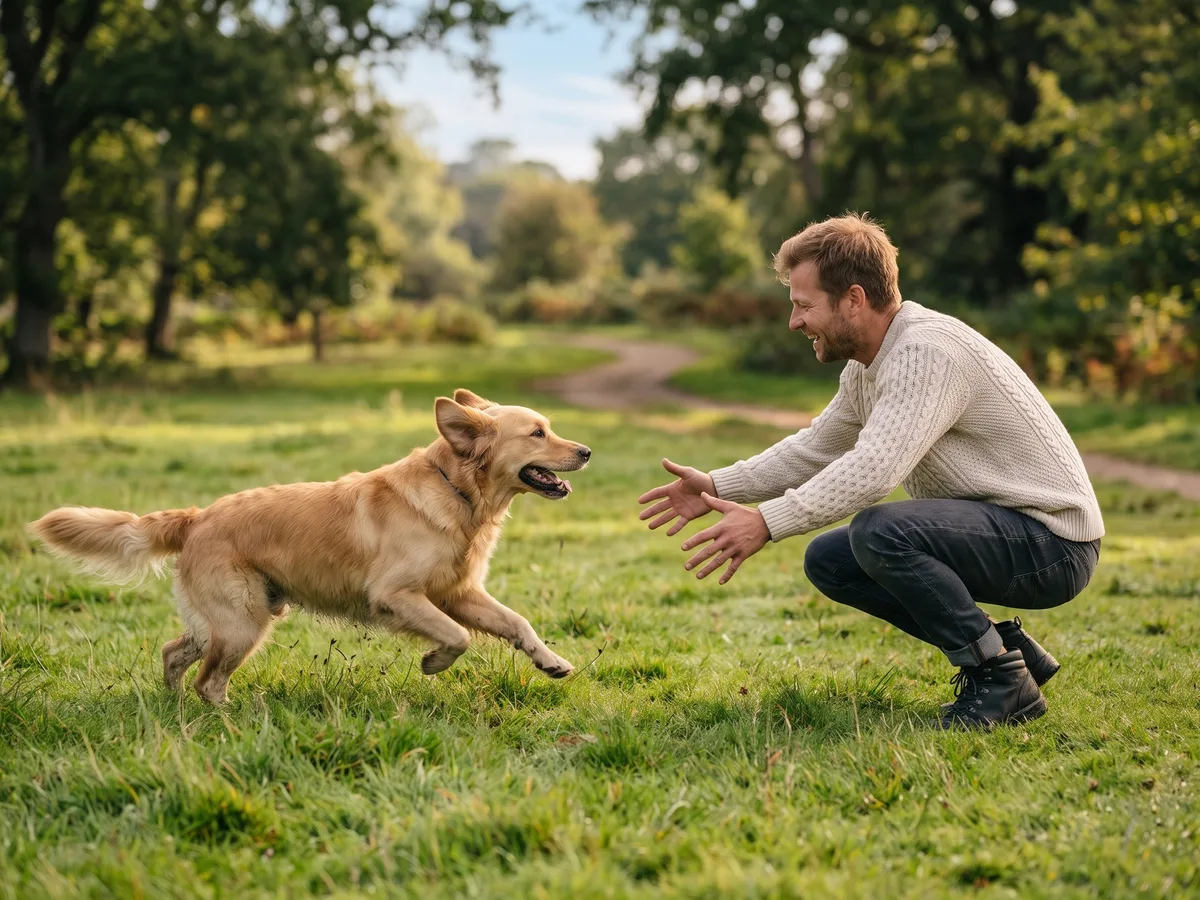
A healthy adult golden needs a lot of exercise — at least an hour a day, ideally more, with walks, running and play. Bailey is happiest when the walk includes a lake or a stick to fetch.
Brain work counts too: short training sessions, sniffing games and puzzle toys tire a golden out as much as a long walk.
- At least 1 hour of activity a day
- Training and games count too
03
Brushing and care

Goldens have a dense, water-repellent double coat and shed all year, more heavily in spring and autumn. A good brush two or three times a week keeps the fur — and the sofa — under control.
Check the ears every week, especially after swimming, and keep the claws short. Regular check-ups at the vet are a good idea, as the breed can be prone to hip and elbow problems.
- Brush 2–3 times a week
- Check the ears after swimming
04
Food and routine

Goldens love food and put on weight easily, so we weigh the meals and count treats as part of the daily portion. Two meals a day at regular times work well for an adult dog.
Above all, a golden needs company. Bailey follows us from room to room and is happiest when he is part of everything the family does.
- Weigh meals, count treats
- Two meals a day for adult dogs
Sources
- Golden Retriever — American Kennel Club akc.org
- Golden Retriever — Wikipedia en.wikipedia.org
- Golden retriever — Britannica britannica.com