01
Choose an easy first route
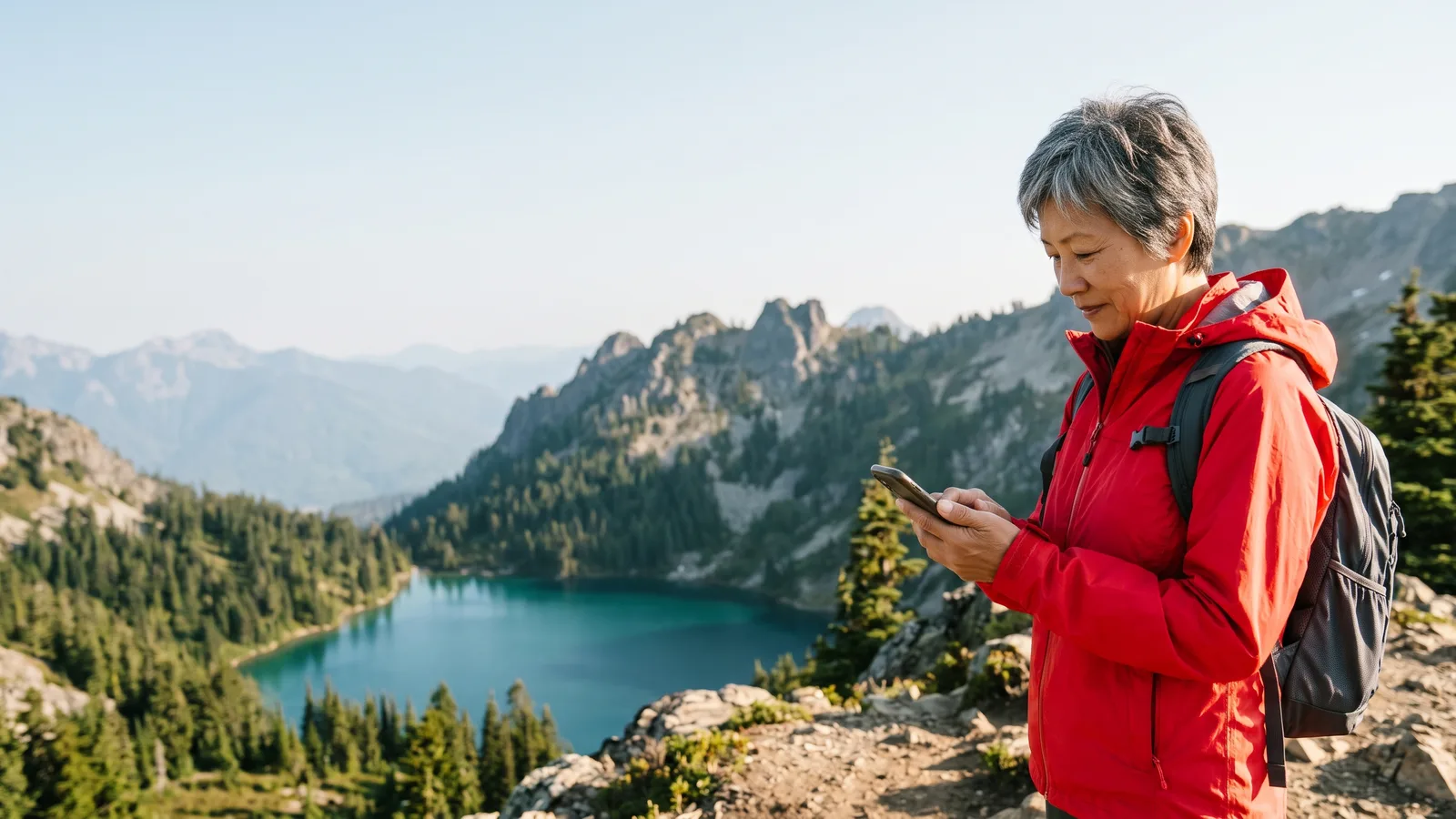
Start with a marked trail of about 8–12 km and no more than 600–800 metres of climbing. To estimate the time, plan an hour for every 5 km plus an hour for every 600 metres of ascent — this is known as Naismith’s rule.
Pick a route that ends at a hut or has an easy way back, and check the weather forecast the evening before and again in the morning. In the mountains, storms often build up in the afternoon, so start early.
- 1 h per 5 km + 1 h per 600 m of ascent
- Start early in the day
02
What to pack
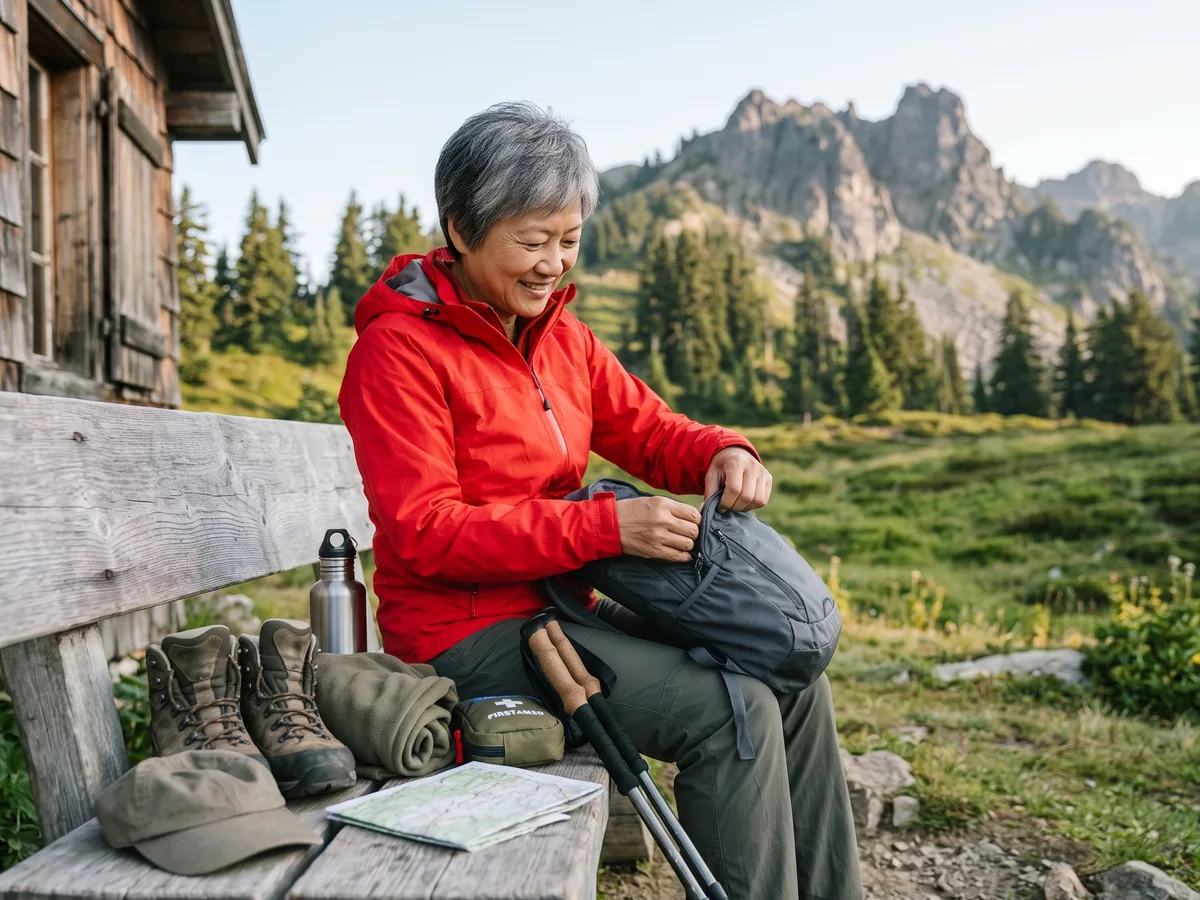
Good hiking boots with grip, a rain jacket, a warm layer, a cap and sunglasses, a map, a charged phone and a small first-aid kit. Even in summer it can be much colder at the top than in the valley: the air cools by about 0.6 °C for every 100 metres you climb.
Take enough water — about half a litre for every hour of walking, more on hot days — and some snacks for the breaks.
- About 0.6 °C colder every 100 m up
- Half a litre of water per hour
03
On the trail
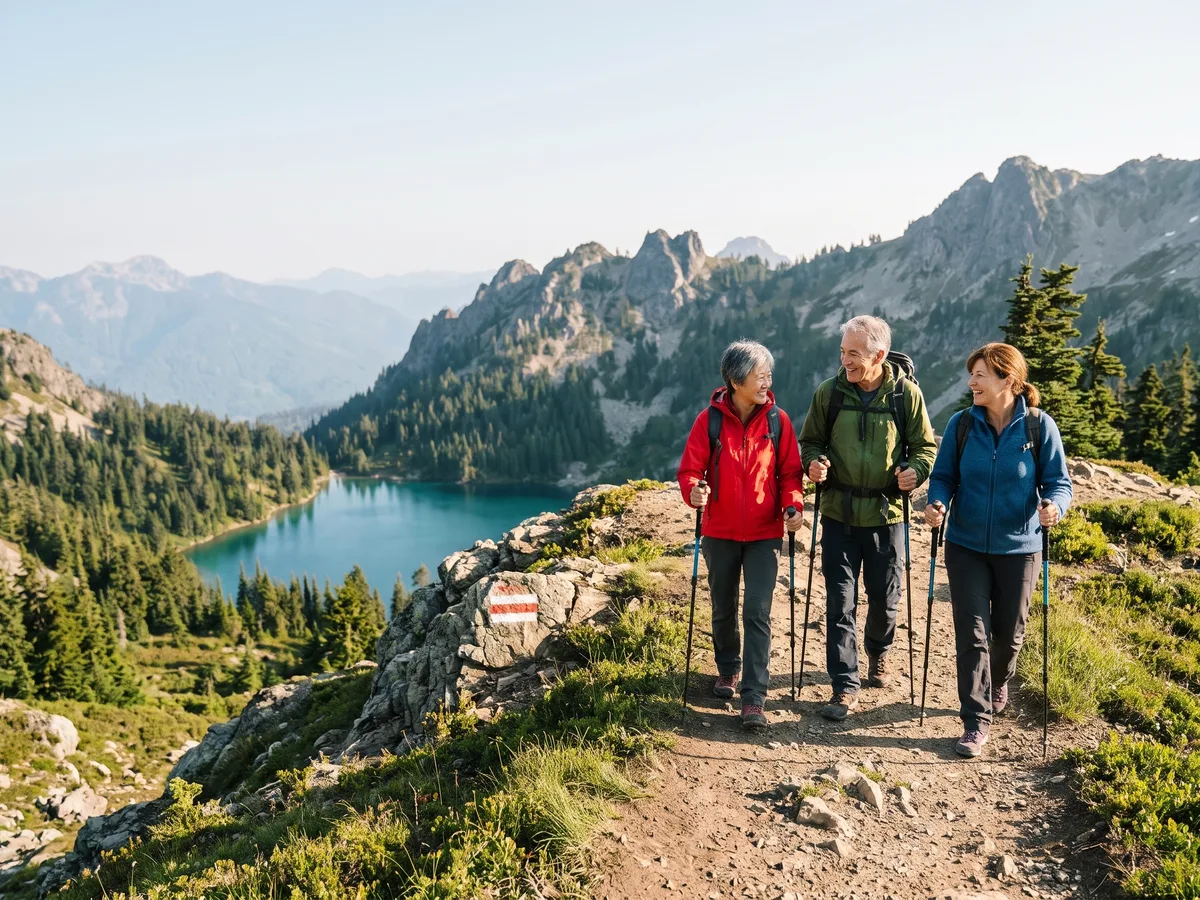
Follow the painted waymarks and walk at a pace at which you can still talk. Trekking poles take weight off your knees on the way down.
Tell someone where you are going and when you plan to be back. If the weather turns or you feel tired, turning back is always the right decision.
- Walk at a talking pace
- Tell someone your route
04
Huts and the joy of arriving
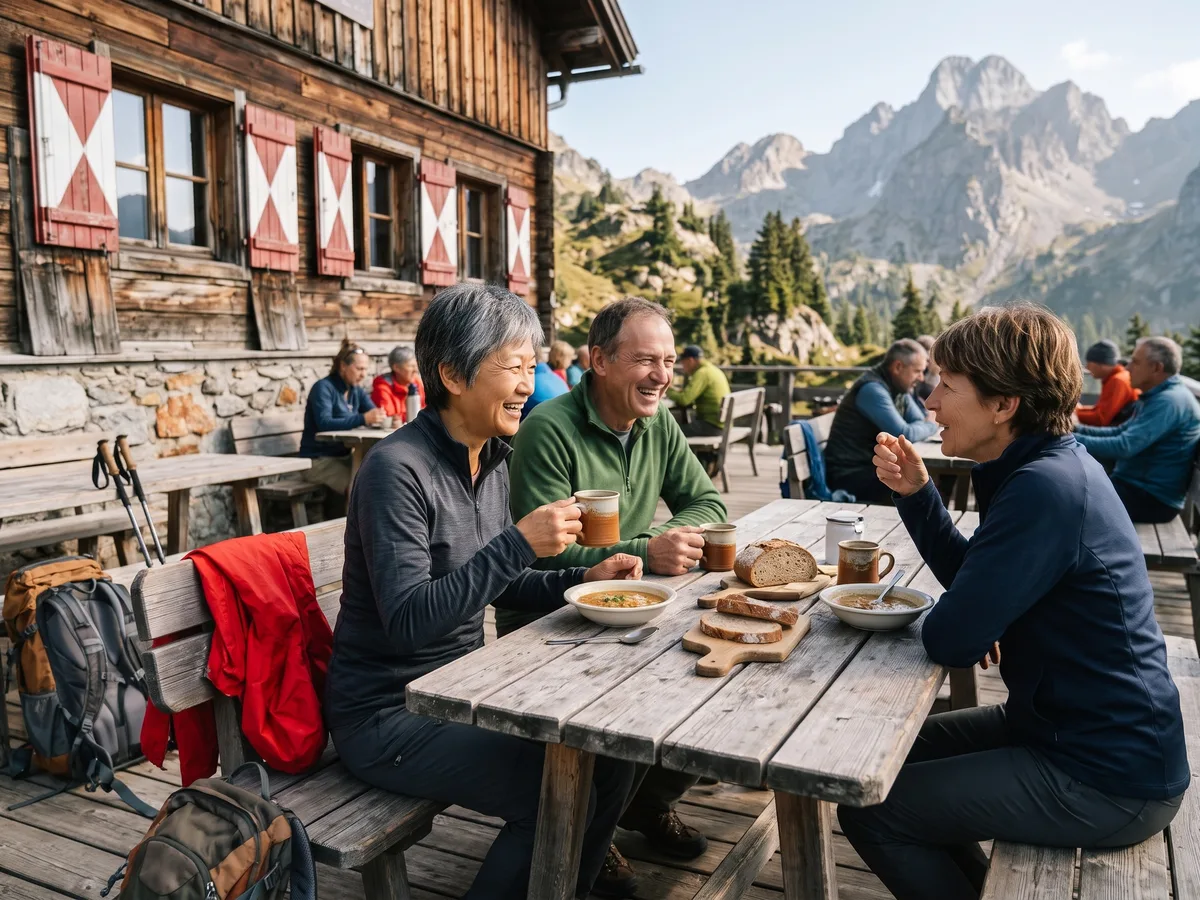
Mountain huts serve hot drinks and simple, hearty food, and many have beds for the night. In high season it’s best to book ahead.
Take your rubbish home, stay on the paths and greet the people you meet. And at the top, sit down for a moment: that view is what you came for.
- Book hut beds in high season
- Leave no trace
Sources
- Hiking — Wikipedia en.wikipedia.org
- Naismith’s rule — Wikipedia en.wikipedia.org
- Lapse rate — Wikipedia en.wikipedia.org