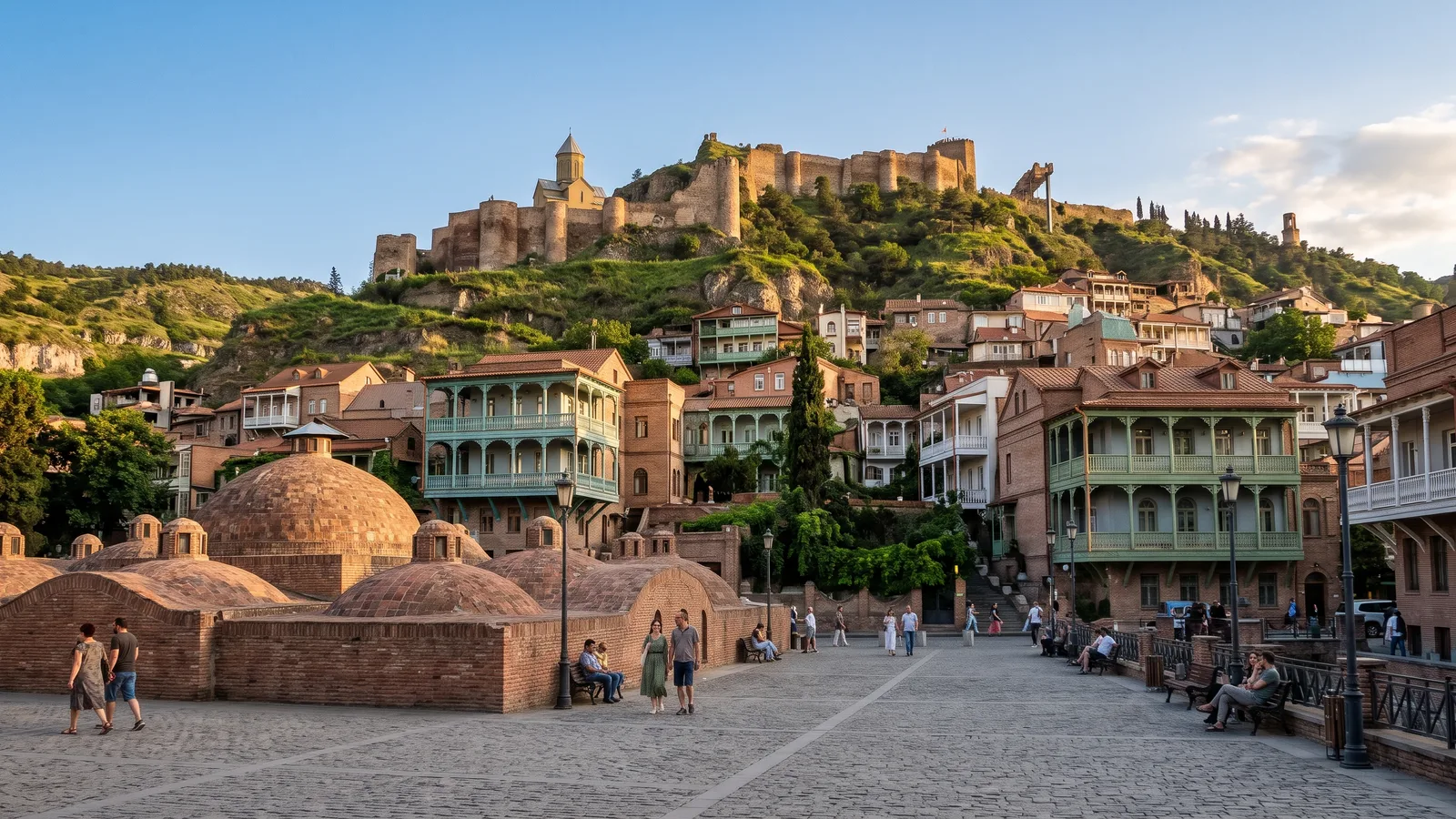
01
A city born from warm springs
According to legend, King Vakhtang Gorgasali was hunting here in the 5th century when his falcon caught a pheasant and both fell into a hot spring. Struck by the warm water, the king decided to found a city on the spot.
The name Tbilisi comes from the Old Georgian word tbili, meaning “warm”. In the early 6th century his son, King Dachi, moved the capital of the kingdom here from Mtskheta.
- Tbili means “warm”
- Capital since the early 6th century
02
Narikala, the fortress above the city
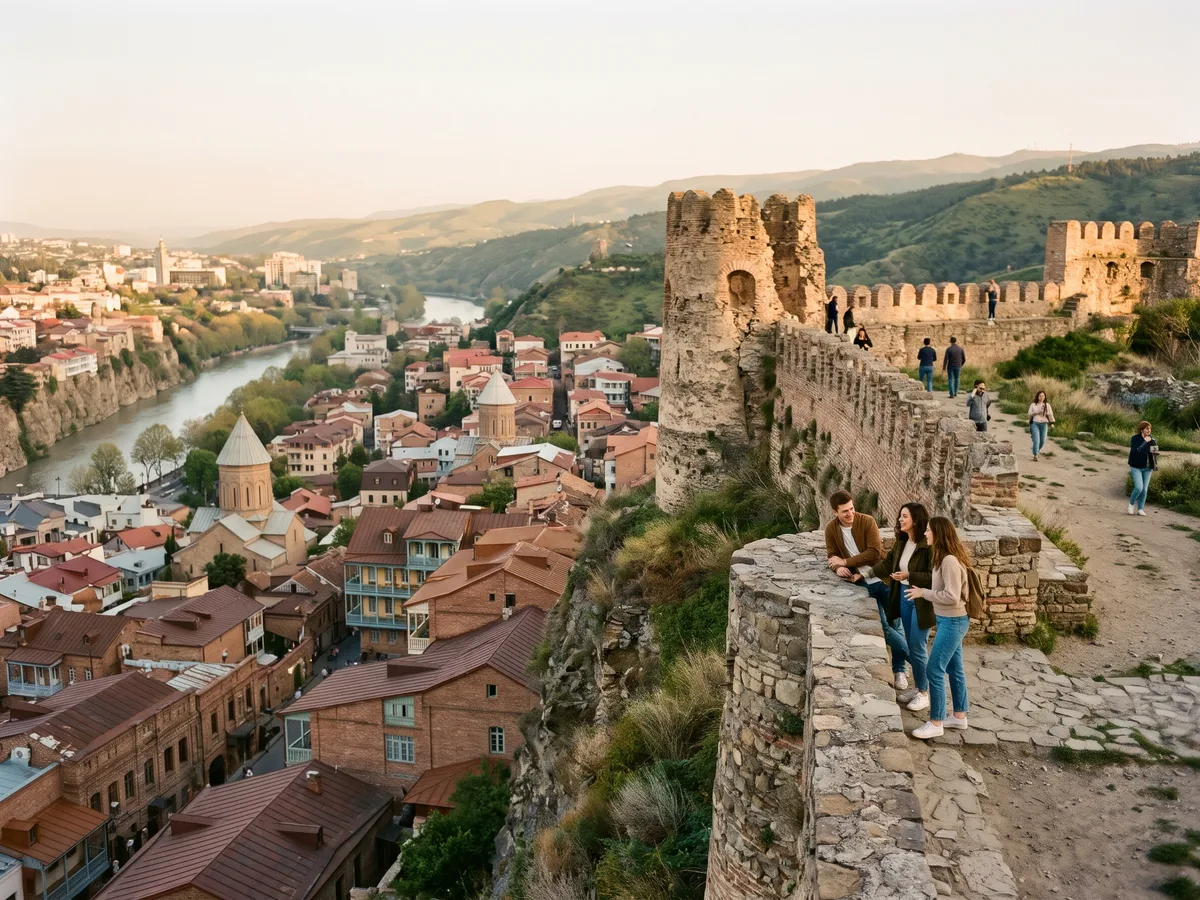
The fortress of Narikala crowns the ridge above the old town. Its first walls date from the 4th century, and over the following centuries Persians, Arabs, Georgian kings and Ottomans rebuilt and extended it.
Today a footpath and a cable car from Rike Park lead up to the walls. From the top you can see the whole old town, the Mtkvari river and the hills around the city.
- First walls: 4th century
- Cable car from Rike Park
03
The sulphur baths of Abanotubani
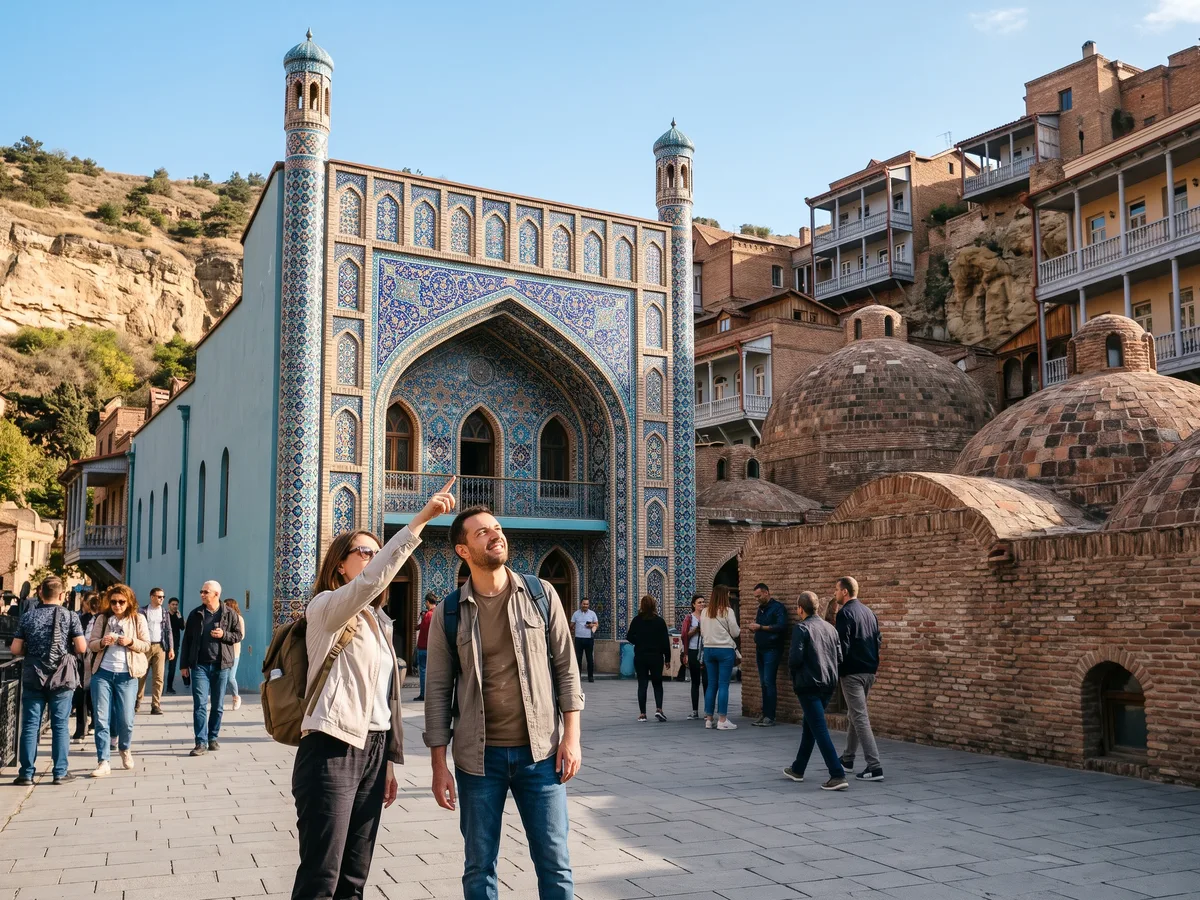
At the foot of the fortress lies Abanotubani, the bath district. Hot sulphur water still flows into the bathhouses, which sit partly underground beneath low brick domes.
The most striking is the Orbeliani bath with its blue tiled façade. Many famous travellers have bathed in Abanotubani; in 1829 the poet Alexander Pushkin wrote that he had never known anything more luxurious than the baths of Tiflis.
- Natural hot springs rich in sulphur
- Pushkin visited in 1829
04
Balconies and old courtyards
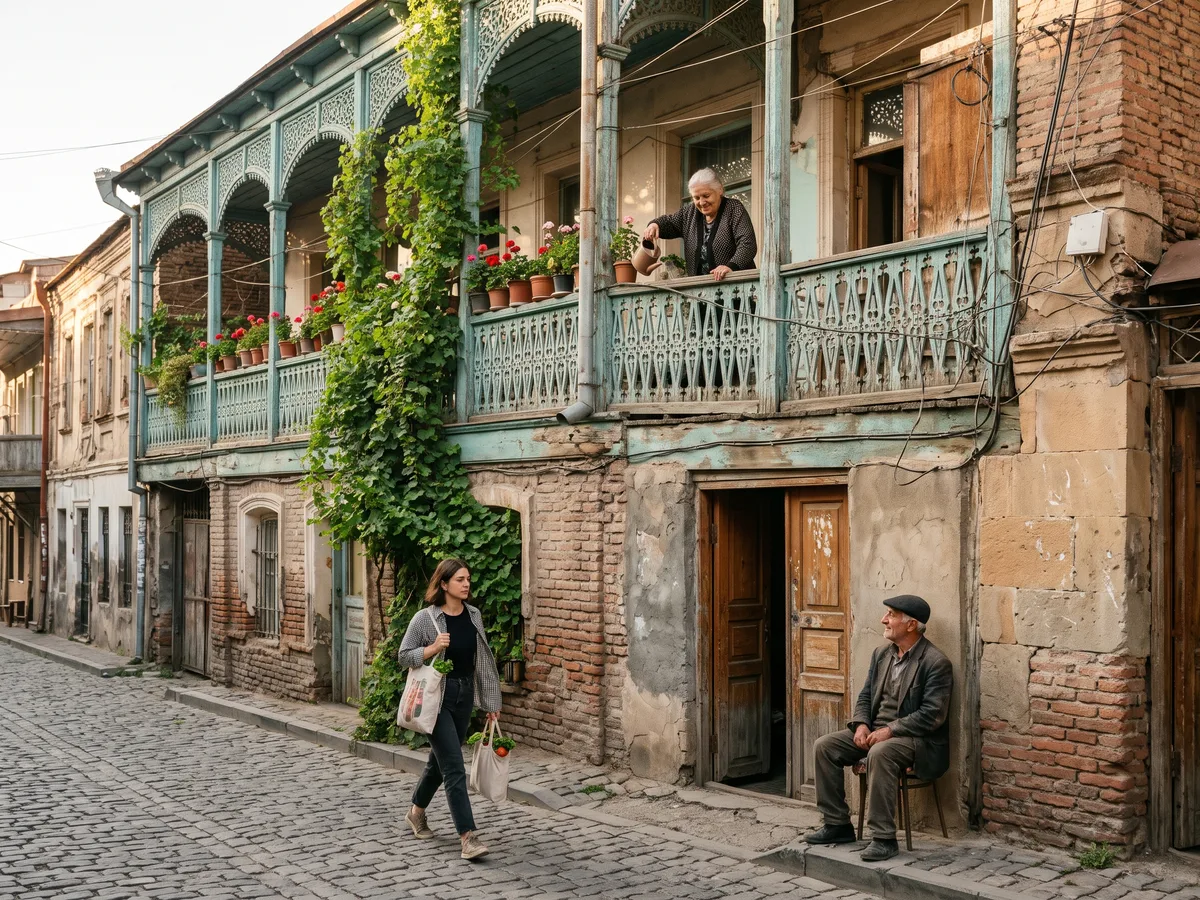
In the 19th century Tbilisi grew into a busy trading city where Georgians, Armenians, Persians, Russians and Europeans lived side by side. The old houses of Sololaki still show this mix: shared courtyards, Italian-style staircases and long carved wooden balconies.
Many of the balconies are painted turquoise or green and hang over narrow streets. Walk slowly, look up and peek into the courtyards — this is where the city’s history is still lived in.
- Sololaki: houses from the 19th century
- Peek into the courtyards
Sources
- Tbilisi — Wikipedia en.wikipedia.org
- Narikala — Wikipedia en.wikipedia.org
- Abanotubani — Wikipedia en.wikipedia.org
- Tbilisi — Britannica britannica.com
- Georgian National Tourism Administration georgia.travel